

Robot Bag Service Records: Reindexing and Missing Metadata
2026-11-05
Robot Bag Service Records: Reindexing and Missing Metadata
Reindexing needs a specific description in a robot service record. The rosbag2 Jazzy source describes its reindex verb as reconstructing a bag's metadata file. That is different from collecting a new observation window, and it does not by itself demonstrate that missing message data was recovered. A service summary should say what changed and which evidence supports any broader claim. This article reads public source material without modifying, opening for playback or recording a bag.
Identify the bag artifact behind the service statement
A handover should name the source directory and the supplied revision before describing a metadata change. A bag can include a metadata file and storage files; a directory name alone does not explain what the contributor received or later produced. Preserve the original supplied material in the account and distinguish it from any subsequently supplied result.
If a service note merely says that a bag was repaired, ask which artifact the word repair concerns. It might refer to a metadata problem, a storage issue or another reported symptom. Those are different questions. A recipient should not select the most comprehensive interpretation simply because the note uses a reassuring label.
Read the reindex verb's stated scope
The official Jazzy reindex verb source describes reconstructing the metadata file for a bag. It checks for a bag directory and passes storage options to the reindexer. This is a source-level description of the verb's purpose, not an execution result for an actual service submission.
The description supports a narrow question: which metadata artifact was reconstructed, and from which retained bag material? It should not be rewritten as a universal guarantee of data recovery. This article does not run the verb, invoke the underlying API or provide a command line for changing a service archive. No bag content has been examined here.
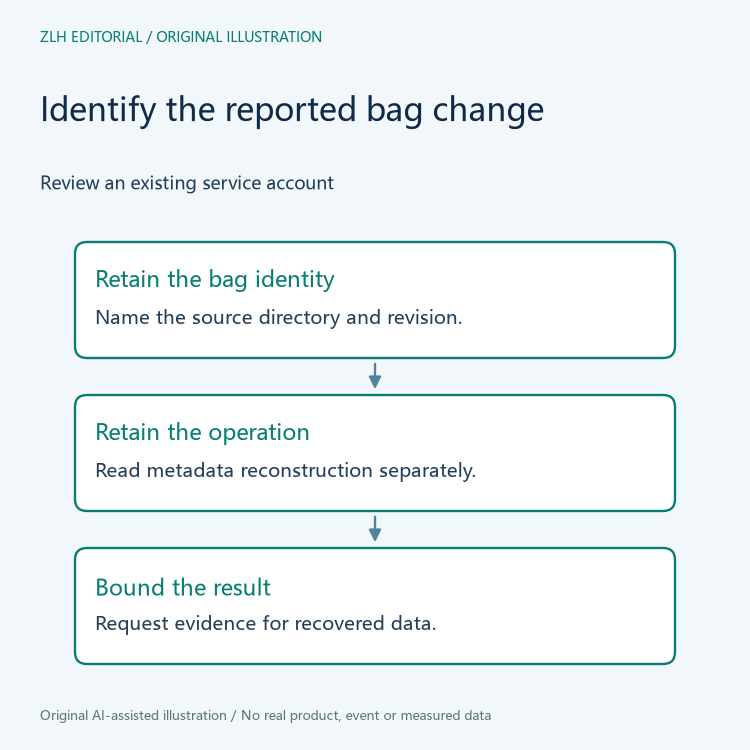
Keep metadata distinct from the stored message material
The official rosbag2 Jazzy README describes recording and playback, lists reindex among the available verbs, and explains a bag directory containing metadata.yaml and storage files. That distinction helps a reader identify which part of a supplied collection a metadata reconstruction statement concerns.
A new metadata file is not an additional period of physical observation. Nor does the presence of metadata establish every claim about the stored messages. If the contributor reports that previously missing data became available, the service account needs to identify what data was recovered and what examination supports the statement. The name of the operation alone cannot supply that evidence.
Distinguish a reconstruction account from a recovery result
A reconstruction account can describe its input artifact, software context and resulting metadata. A recovery result makes a further statement about the evidence now available. Keep these statements separate so the recipient can understand what was actually supplied. This does not imply that recovery is impossible; it means that a particular recovery claim requires its own support.
The same boundary applies to completeness. An intelligible metadata summary does not demonstrate that every message expected by a service investigation was originally captured. Any statement about an incident window or a missing segment must remain tied to the relevant source material and observation account. This article does not infer the content of an unseen archive from a metadata filename.
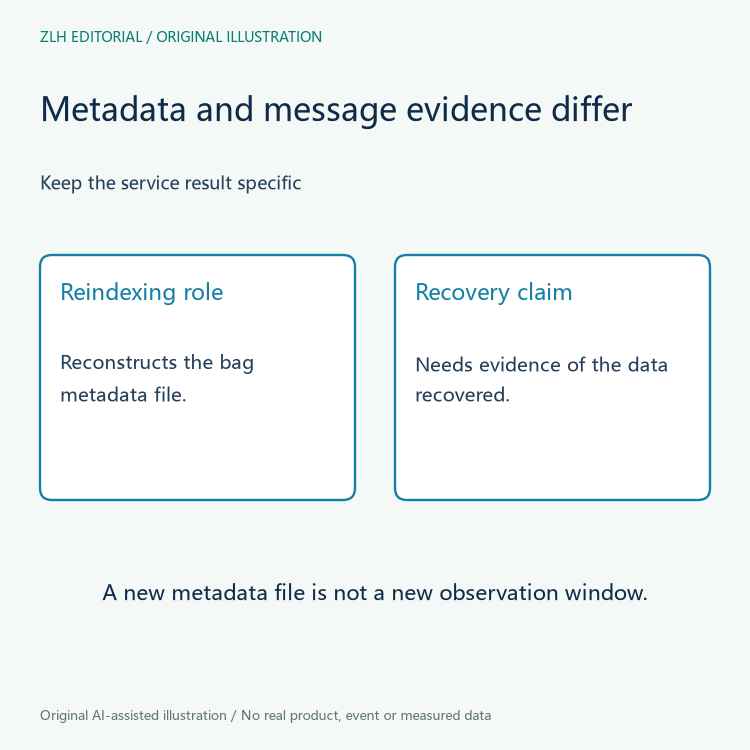
Review a fictional service revision
Imagine a fictional service packet that originally lacks a metadata attachment. A later packet includes a newly supplied metadata file, and its summary says that all lost messages were recovered. The reviewer should ask what evidence supports the message-recovery statement, while separately documenting the new metadata artifact. This invented case includes no real directory, message counts or successful recovery.
A revised explanation might narrow the result to metadata reconstruction and identify questions still open about the message material. That narrower statement can be useful. It should not be treated as a failed service outcome merely because it leaves another question unresolved. Conversely, a broad recovery statement should not be accepted only because the revised packet looks more complete.
Keep the review at the documented evidence boundary
Both sources use the Jazzy branch and were read on November 5, 2026. A service involving another software context should retain its own applicable reference. This article reports no file-system repair, storage verification, playback result or robot diagnosis. The original figures contain no fabricated archive contents or recovery statistics.
A useful conclusion identifies the supplied bag revision, the stated metadata operation and any unsupported claim about recovered data. Related reading is available in the robot service evidence collection and article directory. Keeping Reindexing specific allows a recipient to understand what the service account actually establishes before treating it as a broader statement about the retained evidence.


