

Robot Intake maxlength FAQ: Read the String Length Unit
2026-11-05
Robot Intake maxlength FAQ: Read the String Length Unit
The maxlength attribute in a robot intake form needs a defined string-length unit before someone describes the field as allowing a fixed number of visible characters. A user-facing label and a technical constraint may be counting different things. This FAQ reads the HTML and Infra living standards through a hypothetical service description field. It does not open an intake portal, submit a ticket, reproduce a rejection or infer a hardware diagnosis from text-entry behaviour.
What does the standard limit measure?
The HTML rule for limiting user input length defines the maximum allowed value length through a valid non-negative integer attribute. Its use of string length should be read with the Infra string definition, which measures length as the number of code units. That technical quantity is not a universal count of what a reader perceives as separate displayed characters.
For the hypothetical robot service field, retain the exact attribute value and the relevant control type. Ask how any accompanying counter describes its own unit. Do not assume that an interface message using the word characters has explained the technical representation. A useful handover connects the wording shown to users with the field's declared rule and the implementation evidence supplied by the provider.
Why can displayed text make counting ambiguous?
A visible symbol and its underlying string representation are different objects of discussion. Code-unit length concerns the representation used by the standard's algorithms. A visual text review concerns what the page displays and what a person understands. The reviewer should not silently replace one with the other when describing a limit. If a provider claims that its counter measures displayed characters, ask which counting convention it implements and where that claim is documented.
This article supplies no measured text example and has run no character counter. The hypothetical issue is simply an unclear specification: a document names a maximum but omits the unit. Resolving that issue requires the rule and the relevant value, rather than a screenshot of an apparently short sentence. Preserve any original sample supplied for a real investigation so that a later reviewer can assess its actual representation without reconstructing it from appearance.
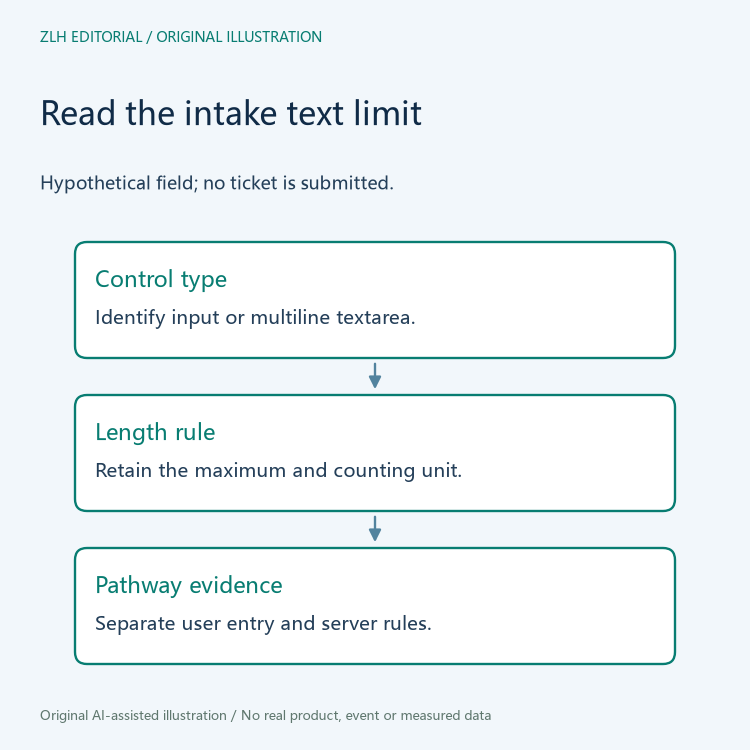
Does the attribute describe every validation pathway?
The HTML standard qualifies its too-long constraint with conditions including the dirty value flag and a value last changed by a user edit. It also allows user agents to prevent a user from setting an overlong value. Those conditions matter when reading a report about behaviour. A broad assertion that every value in every pathway will receive the same browser response goes beyond the attribute definition.
In the hypothetical intake handover, distinguish a description of ordinary user entry from a description of a prefilled or programmatically changed value. Identify the pathway a supplied observation actually covers. A server-side acceptance rule is another part of the service design and must have its own documentation. Reading the browser constraint does not reveal that server rule, prove a ticket was saved or establish that an uploaded attachment passed intake.
What changes for a multiline service description?
The standard notes that a textarea's API value differs from its raw value and that newline normalization occurs before the maximum-length check. It distinguishes that normalization from the wrapping transformation. A review of a multiline field should therefore retain the control type and the relevant value representation, rather than assume that visual line wrapping inserts the same characters as an entered newline.
Suppose a hypothetical provider changes a one-line summary to a multiline description. That change should be documented with the revised field and the counting explanation. It does not by itself prove improved intake completeness or establish an observed failure in the earlier version. Keep the old and new specifications together, then connect any actual observation to the correct revision. This preserves the question that a future service reviewer needs to answer.
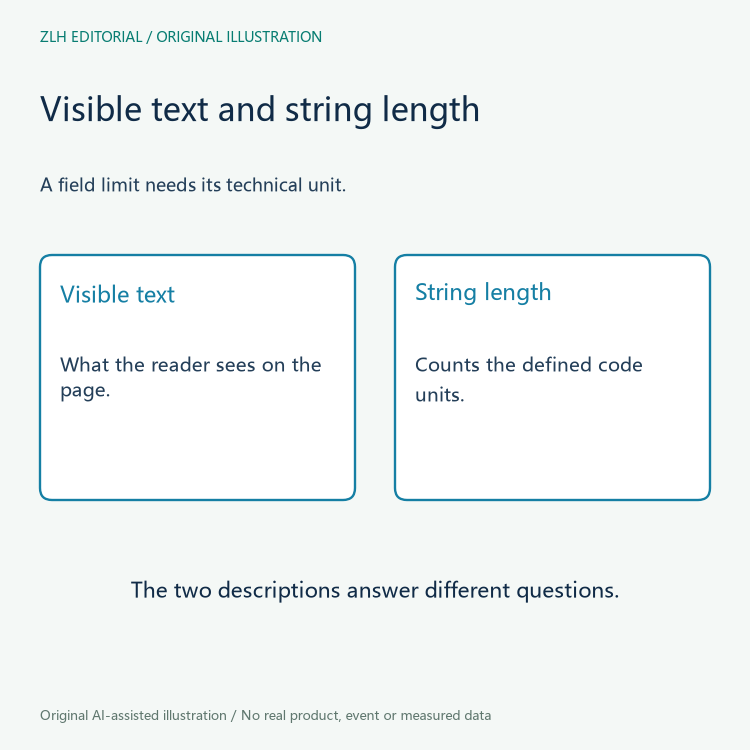
How should the FAQ report an unclear limit?
A precise note names the control, the declared maximum, the string-length convention, the input pathway and any separately documented server rule. Where information is missing, identify it directly. Avoid saying that the robot service rejected useful evidence unless a real submission record supports that event. This article has collected no user text, ticket identifier or response from a live service.
The drawings are original conceptual explanations of specification reading. They are not screenshots of a form or traces of an interaction. More methods can be found in the technical material category and related resource category. Reading maxlength with its unit and value context gives the intake team a concrete documentation question while leaving actual service behaviour to evidence from the supplied implementation.


