

Robot Intake Choices: Read Option Labels and Values
2026-11-04
Robot Intake Choices: Read Option Labels and Values
When a robot service form offers a category such as documentation enquiry, the words a person sees may differ from the value associated with that choice. That difference can be intentional. It can also leave a support reviewer unsure how the selection relates to a later intake record. Reading option labels and values together helps explain the interface without assuming that a displayed choice has reached a service team. The example here is fictional and no request is submitted.
Start with the category the person is trying to choose
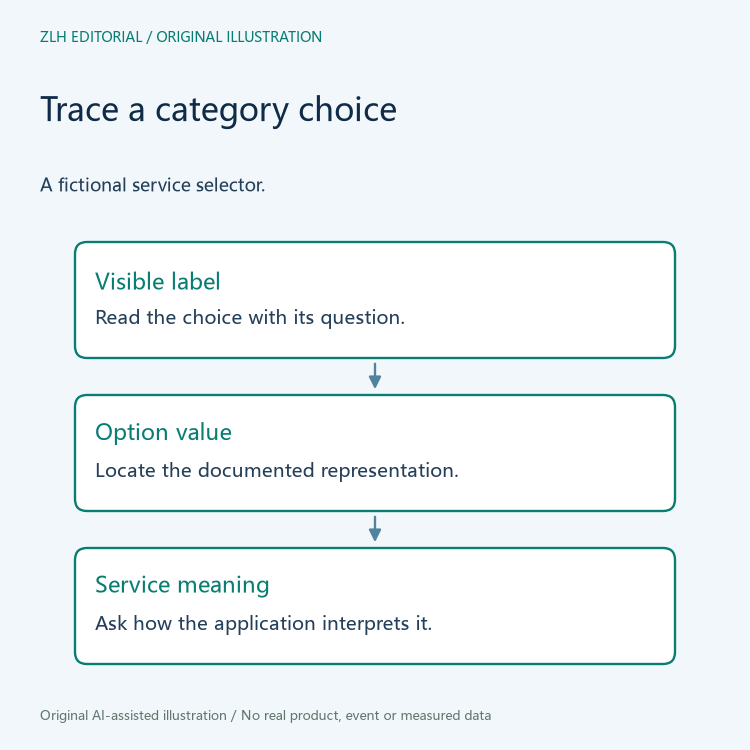
Imagine a hypothetical intake page with a service-category selector. One choice reads Documentation enquiry, while the associated value is docs. Another choice concerns an appointment question. These invented labels and values illustrate a mapping; they are not actual routing codes or instructions for a deployed form. The review task is to explain which visible choice corresponds to which documented value, then identify what remains unknown about later handling.
Keep the selector's question in the record along with the chosen label. A label such as Other means little when detached from its group and surrounding instructions. Also distinguish the wording that names the whole selector from the wording that names an individual option. A screenshot may show both clearly, yet still omit the technical mapping. The next step is to ask for the relevant form definition or an attributable explanation, not to guess a backend category from its English abbreviation.
Read the option's label and value separately
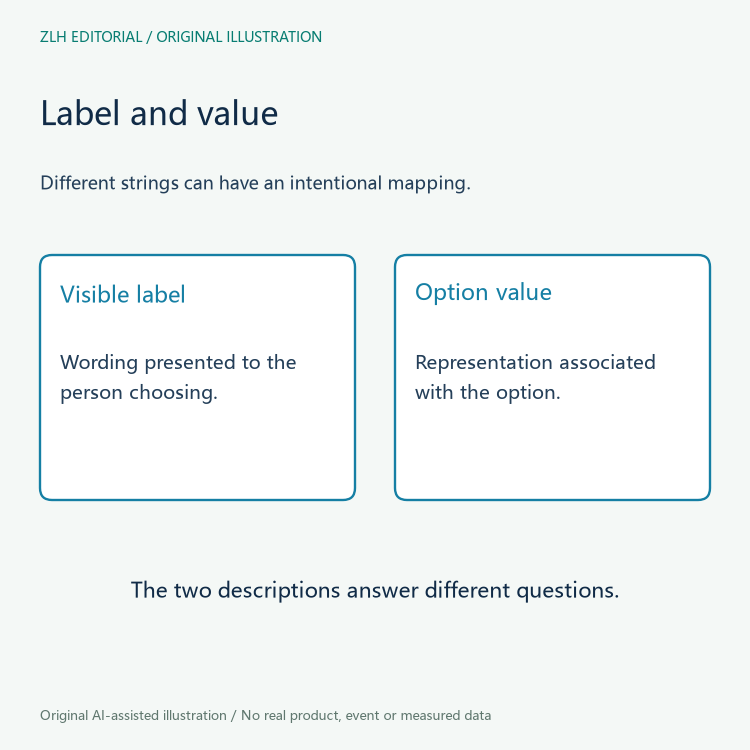
The HTML Standard's option definition distinguishes the option's label from its value. It defines how a supplied value attribute or a text fallback determines the value. This establishes a document-reading distinction, not a promise about a particular portal's server. The Living Standard can evolve, so a review should retain the version context of the material inspected.
In the fictional docs example, the visible phrase is intended for the person choosing a category, while the short value is part of the form's representation. Do not call that mismatch a translation error merely because the strings differ. Instead, examine whether the mapping is intentional and documented. If a content editor changes the visible phrase but keeps the value, ask whether the service team still interprets it consistently. A cosmetic wording change can create a substantive expectation question.
Connect the choice to the form's entry-list rules
The separate HTML form entry-list algorithm describes how eligible controls and selected options contribute entries. Its conditions matter: a visible selection alone does not show that a complete request was delivered. The selector's form association, name and state belong to the document context when determining what entries are constructed.
A service reviewer can ask the portal supplier to connect the category question, the relevant control name and the selected option value in one explanation. If the supplier provides a harmless demonstration record, identify it as such and say which stage it represents. An entry list, an outgoing request and an accepted intake ticket are separate evidence objects. The existence of one should not silently become a claim that the next stage succeeded.
Treat routing meaning as an application question
The value docs does not intrinsically mean that a technician has been assigned or that a documentation specialist will reply. Those meanings depend on the application's service rules. Request the relevant category dictionary or workflow explanation from the responsible team. If a category has been retired, ask how the portal explains that change and how older records retain their historical meaning. Reusing a short code for a new purpose can make old records ambiguous unless the context is preserved.
Suppose a fictional confirmation view shows a broader category than the option selected. The review can record the two phrases and ask whether a documented normalization explains the difference. It should not announce that the enquiry was misrouted without evidence of the routing outcome. Likewise, a matching phrase on the confirmation view does not prove staff receipt. Keep interface wording, submitted representation and service interpretation in separate statements so each can be checked.
Maintain the mapping when labels change
A useful handover names the reviewed page, the selector question, the visible label, the associated value and the source of the routing explanation. It also states which stages were not observed. When a revised form is supplied, revisit the exact mapping rather than assuming a previous screenshot still applies. If only the label changed, retain the earlier wording in the revision record so historic user reports can be understood.
This practice supports a clear intake conversation without declaring a repair, a response time or an accessibility outcome. A reader should be able to follow the category from the person's wording to the documented technical value and then see the open service question. Our technical information category and related resources category provide further navigation for service-documentation reading. They are category pages and do not imply that a specific robot or service request has been evaluated.


