

Requests Release News: Identify the Intake Header Context
2026-11-03
Requests Release News: Identify the Intake Header Context
A service portal discussion can use the word headers for information at different points in a request's life. A software input description, a prepared message and a server's observed request are related objects, yet they require different evidence. Requests' May maintenance release offers a specific reason to keep that context visible when reading technical attachments for a robot service intake system.
A dated correction to the software input description
The official Requests 2.34.2 record, dated May 14, 2026, describes moving the headers input type back to Mapping to address typing variance issues. The item concerns the software interface's type description. This article revisits that existing release record as checked in November, rather than reporting a newly released portal feature.
The official developer reference describes headers as an optional input for HTTP headers sent with a request. That documentation identifies the role of the parameter. It does not show what a particular service client sent or what a server received. No service request, authentication exchange or portal modification was performed while preparing this article.

Give each technical attachment a clear place in the discussion
Imagine a hypothetical intake-system review containing a developer's configuration note and a report that a submission was not accepted. The recipient should first ask what each attachment describes. A note about an input type can help explain the intended interface, while a report of actual traffic needs evidence from the relevant activity. Combining their labels without identifying their objects makes the discussion harder to follow.
The author of an attachment can state whether it describes an intended configuration, a prepared request or an observed exchange. The recipient can then ask for the evidence appropriate to the question. This does not require publishing sensitive header contents. A responsible technical summary can identify the role of a record while keeping restricted details within the authorized support process.
The distinction is especially useful when someone says that the headers are correct. Correct relative to which requirement, and established by which record? A software type description, an application expectation and a server-side observation may answer different parts of that question. The parties should make their intended meaning explicit instead of treating the phrase as a complete explanation.
Keep a type correction separate from a submission outcome
A release note about typing does not establish whether an application submitted a service form successfully. The actual submission question belongs to the relevant request and response evidence. If the provider supplies such evidence, identify its scope and the activity it concerns. If the evidence is unavailable, retain the unanswered question rather than inferring an outcome from the upstream version.
The same principle applies when reviewing a local code change. A developer can explain what changed in the software description without claiming that a live exchange occurred. A later observation should have its own record. This article does not infer a network defect, recommend changing credentials or provide instructions for sending support data to an external endpoint.
Write a support question that another person can answer
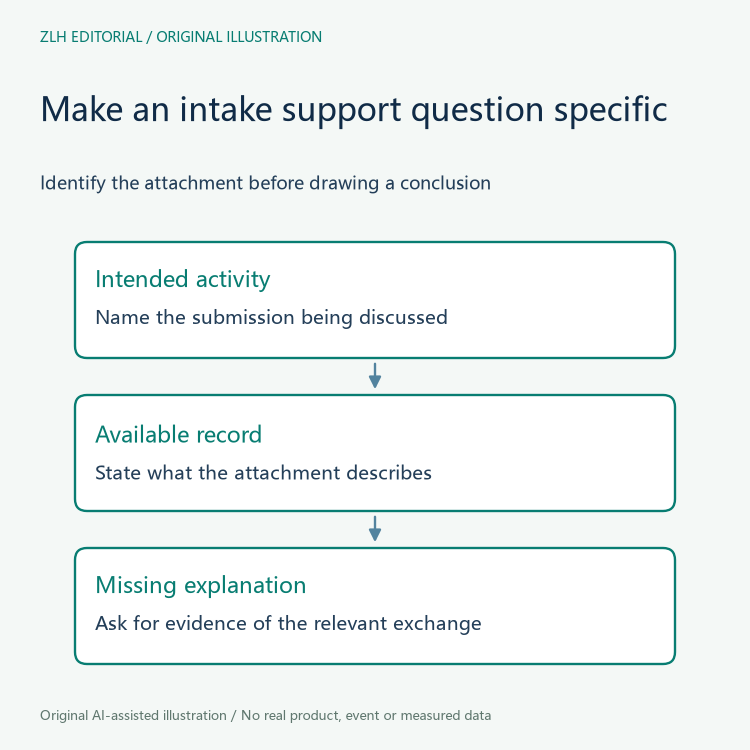
A useful question names the intended operation, the available attachment and the missing explanation. For example, the hypothetical reviewer might ask which evidence identifies the request associated with the reported submission. That is more specific than asking whether a library supports headers. The responsible developer can then supply an appropriate explanation or state which material was not collected.
Chronology also matters. A current configuration note may have been written after the event under discussion. Keep its date and role visible, rather than using it retrospectively as proof of earlier conditions. A later correction can clarify the system design while leaving the historical observation incomplete. Clear recordkeeping allows both statements to be true without inventing missing traffic.
When a technical note contains an example rather than captured traffic, label that role explicitly. The example can explain the expected shape of information without claiming that those values were transmitted. This lets a developer communicate the interface clearly while preserving the separate question about the submission the support team is investigating.
Use the maintenance news to improve terminology
The release provides a narrow example of a software input description changing. In service intake documentation, the practical lesson is to locate each header statement in its actual context. Interface material can explain intended use, while an observed exchange requires evidence of that exchange. Neither should be enlarged into a conclusion about physical robot condition or a completed repair.
The accompanying original diagrams contain only conceptual request-record relationships, with no real headers, tokens or customer information. More topics appear in our robot service intake collection and article directory. Identifying the context of a technical statement helps support participants ask clearer questions while preserving the limits of the information actually supplied.


